

Last Updated: November 17, 2026
Quick Summary
Commercial electrical services for small business cover the design, installation, repair, and maintenance of the electrical systems that keep a commercial property running. A licensed commercial electrician handles everything from new wiring and panel upgrades to lighting, troubleshooting, and code compliance. The scope can include three-phase power distribution, dedicated equipment circuits, security lighting, and low-voltage systems for data and alarms.
- Schedule an annual electrical inspection to catch hazards and build a maintenance roadmap.
- A panel upgrade makes sense when your service cannot safely carry the load you need.
- Preventive maintenance is the cheapest electrical work you will ever pay for.
- Ask each contractor to itemize the scope so you compare scope rather than a single number.
- Confirm an active electrical contractor license and verify liability and workers' comp insurance.
Table of Contents
- What Commercial Electrical Services Cover for Small Businesses
- Commercial Electrical Inspection: What a Small Business Should Expect
- When a Commercial Electrical Panel Upgrade Makes Sense
- Small Business Electrical Maintenance That Prevents Downtime
- Pricing Factors: What Drives Cost for Small Business Electrical Work
- Your Electrical Contractor Hiring Checklist
- Lighting, Smart Controls, and Energy Savings That Pay Back
- Request a Quote from S&T Electrical Solutions
- Frequently Asked Questions
What Commercial Electrical Services Cover for Small Businesses
Commercial electrical services for small business cover the design, installation, repair, and maintenance of the electrical systems that keep a commercial property running. For most owners, that means a licensed commercial electrician handles everything from new wiring and panel upgrades to lighting, troubleshooting, and code compliance.
The scope is wider than most owners expect. A single commercial property may need three-phase power distribution, dedicated circuits for equipment, exterior security lighting, and a low-voltage system for data and alarms. Each piece has its own code requirements under the National Electrical Code, which local inspectors enforce.
Below, we break down what each service category actually involves, so you can tell what your building needs before you call anyone.
Installation, Design, and Construction
New construction and remodels start with electrical system design. An electrician can review your floor plan, calculate the electrical capacity your equipment demands, and map circuits before work begins.
Installation work on a commercial property can involve many types of electrical systems, and the right scope depends on the building and its use. You can book a licensed commercial electrician in Wenatchee, WA for your project. Talk with a licensed electrician to define what your property needs.
A common mistake is sizing the service for today's needs and not tomorrow's. If you plan to add equipment or capacity, tell your electrician during design.
Repairs, Troubleshooting, and Emergency Service
Electrical repair starts with troubleshooting, and good troubleshooting is methodical, not guesswork. A qualified electrician traces the fault, tests the circuit, and confirms the fix holds under load. Flickering lights, warm outlets, tripping breakers, and dead circuits all point to different root causes, and treating the symptom without finding the cause just buys you a repeat visit.
Watch out: a breaker that trips repeatedly is telling you something. Never tape it on or swap in a larger breaker to stop it tripping. That removes the safety device protecting your wiring and creates a genuine fire risk. Call a licensed electrician instead.
Commercial Electrical Inspection: What a Small Business Should Expect
A commercial electrical inspection is a documented review of your electrical system's condition, safety, and code compliance.
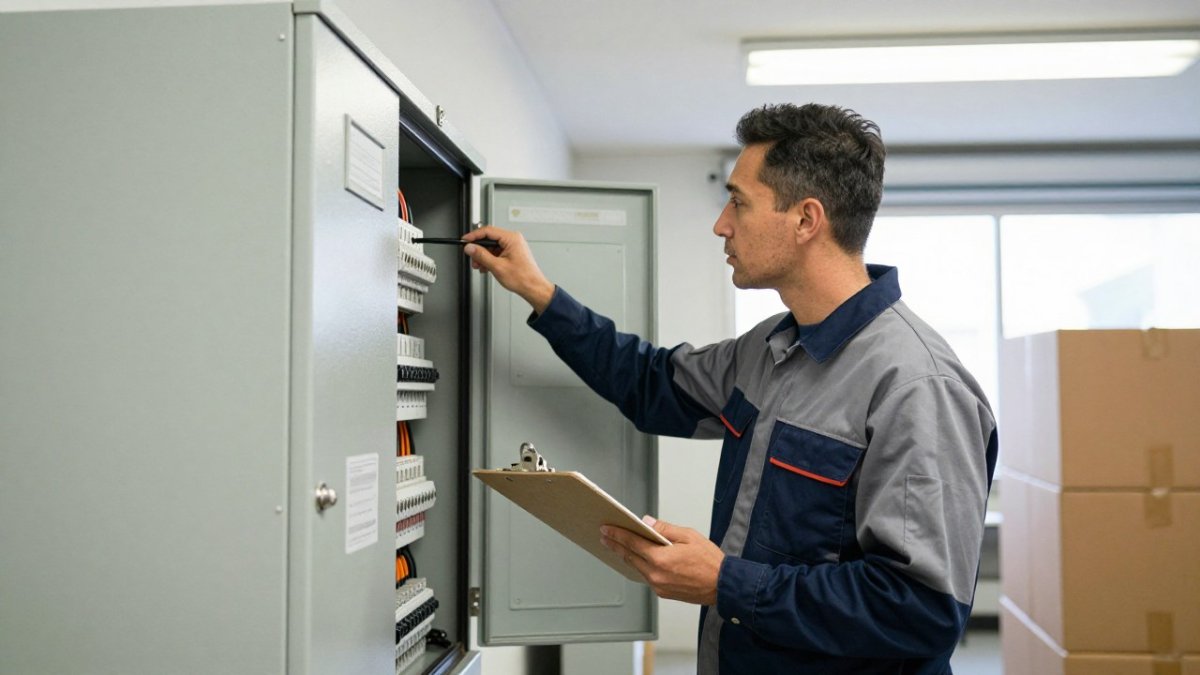
Inspections serve two purposes. First, they catch hazards before they cause a fire or a failed inspection on a renovation. Second, they give you a maintenance roadmap. Many owners schedule one annually; insurers and some lenders may ask for documentation.
If you are buying or leasing a commercial space, consider an inspection before you sign.
When a Commercial Electrical Panel Upgrade Makes Sense
A commercial electrical panel upgrade makes sense when your current service cannot safely carry the load you need, or when the panel itself is outdated, damaged, or full. Signs include no open breaker spaces, a panel that is warm to the touch, rust or scorch marks, and frequent tripping under normal use.
An electrical service upgrade is a bigger job than swapping a box. It can involve new service conductors, a larger meter base, and coordination with your utility. That is why planning matters.
Reasons small businesses request a panel upgrade:
- Adding equipment that draws more power
- Installing EV charging for a fleet or customers
- Replacing a fuse box or an obsolete panel
- Fixing code compliance issues found during inspection
- Making room for future expansion
What Actually Drives the Cost of a Panel Upgrade
Ask each contractor to itemize the service size, conductor type, meter base, permit, utility coordination, and any remediation work, so you are comparing scope rather than a single number.
Planning the Work Around Your Business
If you run servers, refrigeration, or point-of-sale systems, identify those loads in advance and agree on a shutdown sequence and a backup plan with your electrician.
Watch out: a contractor who cannot explain the shutdown sequence, the utility coordination steps, and the expected outage window in writing before you sign has not planned the job. Get that plan in the quote.
If your inspection report recommends an upgrade, you can explore panel replacement and 200 amp upgrades to see how the service works.
Small businesses request a panel upgrade for a handful of common reasons.
| Reason | What it involves |
|---|---|
| Adding equipment | Equipment that draws more power |
| EV charging | Charging for a fleet or customers |
| Obsolete equipment | Replacing a fuse box or obsolete panel |
| Code compliance | Fixing issues found during inspection |
| Future expansion | Making room for growth |
Small Business Electrical Maintenance That Prevents Downtime
Preventive maintenance is the cheapest electrical work you will ever pay for. A scheduled maintenance visit can check connections, test breakers, inspect panels for heat and corrosion, and verify that safety devices work.
A simple annual schedule covers the basics for many properties, with more frequent checks for high-load operations. Between visits, your team can help by keeping panel areas clear and reporting any warm outlets, buzzing fixtures, or flickering lights right away.
The Occupational Safety and Health Administration treats electrical hazards as a leading cause of workplace injury, which is one more reason maintenance is not optional for a commercial property. For more electrical advice as you plan ongoing upkeep, browse our electrical tips and guides.
A Small-Business Safety and Risk Checklist
Maintenance only pays off if it is specific. Use this checklist to decide what your building needs and when to call a licensed electrician:
- Panel and service: Look for warm panel covers, scorch marks, rust, or a burning smell. Any of these means call now, not at the next scheduled visit.
- Outlets and switches: Warm or discolored plates, crackling sounds, or plugs that fall out of the socket point to loose connections or worn devices.
- Breakers: A breaker that trips repeatedly under normal load is a symptom, not a nuisance. Never tape it on or install a larger breaker to stop it tripping.
- Lighting: Flickering or buzzing fixtures can indicate a loose neutral or a failing ballast or driver.
- Cords and equipment: Damaged cords, daisy-chained power strips, and space heaters on shared circuits are common small-business hazards.
- Records: Keep the written inspection report and note the date of each maintenance visit. Insurers and lenders may ask for documentation, and the records help you budget for the next round of work.
How to Prioritize Maintenance on a Tight Budget
Not every finding needs to be fixed the same week. A practical way to prioritize is to separate items into three buckets: hazards that must be corrected now (overheating, exposed conductors, missing grounding), code items that must be corrected before your next inspection or renovation, and improvements that can be scheduled over the next year.
A common pattern is that the highest-risk findings are also the least expensive to correct when they are caught early, while deferred hazards turn into emergency calls and unplanned closures. That is the real return on a maintenance schedule: fewer surprises, and a documented plan you can budget against.
Pricing Factors: What Drives Cost for Small Business Electrical Work
Pricing for commercial electrical work depends on scope. For current pricing or a quote, contact S&T Electrical Solutions directly. Two jobs that sound similar can differ widely based on access, materials, and how much troubleshooting is involved.
A transparent contractor tells you what is included and what is not. Watch out for quotes that are a single number with no breakdown, and for anyone who will not put the scope in writing. Compare the scope, not just the total.
Your Electrical Contractor Hiring Checklist
Hiring the right electrical contractor comes down to verifying credentials and asking the right questions before you sign. A licensed, insured electrician protects your property, your liability, and your timeline. Use this checklist to vet anyone you are considering.
- Confirm an active electrical contractor license and ask for the number
- Verify general liability and workers' comp insurance
- Ask whether the work will be permitted and inspected
- Get a written scope of work and a clear quote
- Ask how they communicate during the project
- Confirm who does the work and whether it is a licensed electrician
- Ask about warranty on labor and materials
- Check references from similar small business jobs
Questions to Ask Before You Sign
The questions that separate a reliable contractor from a risky one are specific. Ask: "Will you pull the permit, and will the work pass inspection?" "Who is my point of contact, and how often will I hear from you?" "What could change the price, and how would you handle a surprise?" "Can you provide references from commercial clients?" A contractor who answers these clearly, in writing, is the one to hire. For a deeper set of questions, review our seven questions to ask a commercial electrical contractor.
Lighting, Smart Controls, and Energy Savings That Pay Back
Beyond the utility bill, better lighting improves safety and security. Outdoor lighting and security lighting deter problems and help customers and staff feel safe. Low-voltage systems can tie lighting, security, and data together for easier control.
The U.S. Department of Energy notes that efficient lighting and controls reduce electricity use in commercial buildings, and the savings compound over the life of the fixtures. Ask your electrician for a simple payback estimate, not just a price.
Request a Quote from S&T Electrical Solutions
The best next step is a conversation about your building and what it actually needs. You can tell us about your electrical project and request a quote.
S&T Electrical Solutions is led by a Washington Master Electrician and holds WA electrical contractor license STELEES765B5. S&T Electrical Solutions provides expert electrical contracting services for residential and commercial properties throughout the Wenatchee Valley, with a focus on clear communication and thoughtful planning from the initial conversation to the final walkthrough.
Contact S&T Electrical Solutions to request a quote for your project.
Frequently Asked Questions
How much do commercial electricians charge per hour?
Rates vary by market, project complexity, and whether the work is scheduled or an emergency call. Most commercial electrical contractors bill either hourly or per project, and many provide a free estimate before work begins. For small businesses, the bigger cost driver is usually the scope: panel capacity, wiring runs, permits, and after-hours scheduling. Ask for a written scope and line-item breakdown so you can compare quotes fairly rather than comparing hourly rates alone.
What should small businesses ask before hiring an electrical contractor?
Ask for proof of state licensing and insurance, the name of the licensed electrician who will supervise the job, and whether permits and inspections are included in the quote. Confirm how they handle change orders and communication during the project. A solid electrical contractor hiring checklist also covers warranty terms, emergency availability, and references from similar small business electrical maintenance or commercial electrical panel upgrade projects.
When should a small business upgrade its electrical service?
Consider a commercial electrical panel upgrade when you add equipment that trips breakers, when panels are warm to the touch or show scorch marks, when you are adding EV chargers, kitchen equipment, or HVAC load, or when an inspection flags an outdated panel. Older panels with limited capacity or discontinued parts are also candidates. A commercial electrical inspection can confirm available capacity before you commit to new equipment.
What permits or inspections might a commercial electrical project require?
Most commercial electrical work requires a permit and at least one inspection by the local authority having jurisdiction, with requirements set by the National Electrical Code (NEC) and adopted local amendments. Inspections typically occur at rough-in and final stages. Confirm in writing that your contractor pulls the permit and schedules inspections, and ask who is responsible for corrections if something fails.