
Fan Repair in Wenatchee, WA
Ceiling fans, bathroom exhaust fans and attic fans that won't start, hum, wobble or run slow, fixed for homes in Wenatchee, East Wenatchee, Terrace Park, Cashmere and Leavenworth.
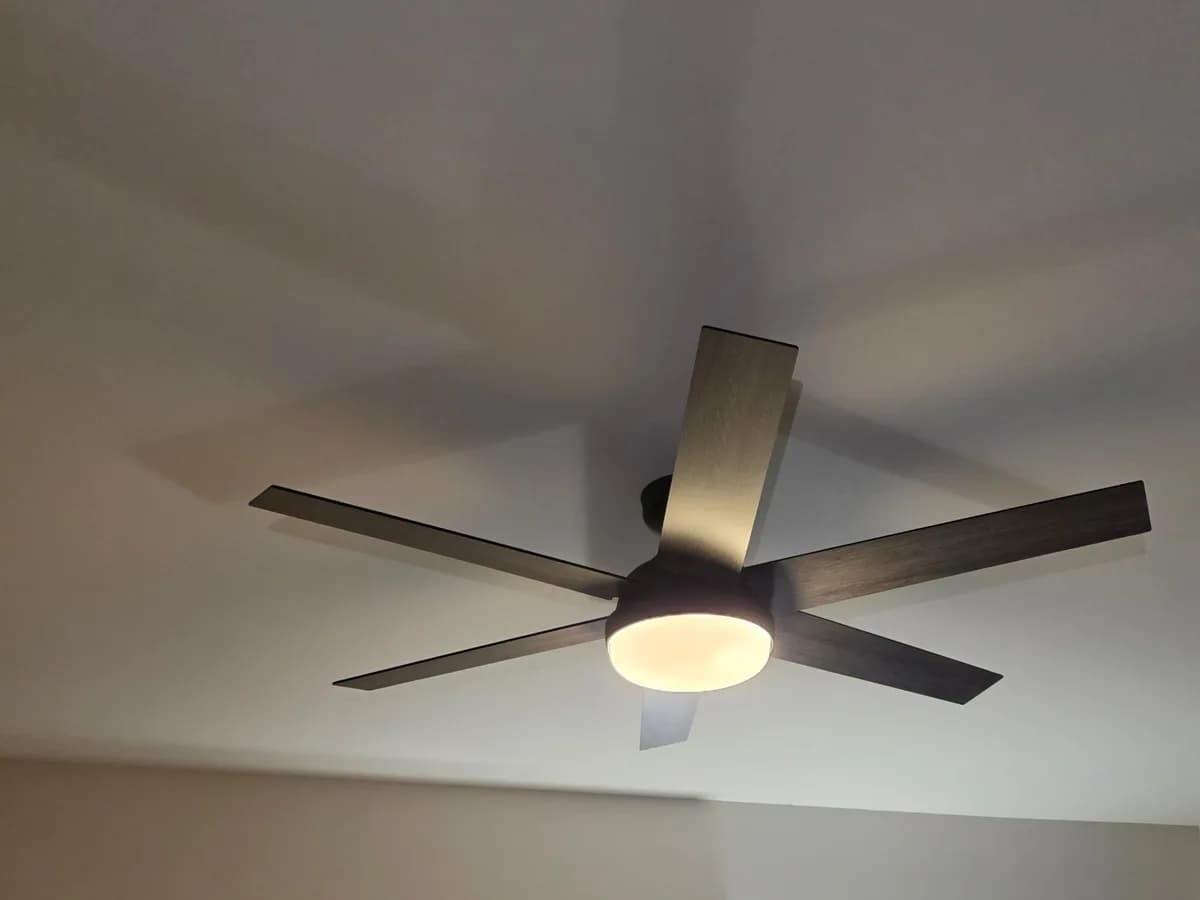
Fan Repair in Wenatchee
The light comes on but the blades don’t move. It hums. It wobbles on high. It only runs on one speed.
Most fan problems sound worse than they are. S&T Electrical Solutions handles fan repair in Wenatchee, WA, for ceiling fans, bathroom exhaust fans and attic fans. We find the cause, fix it, and tell you straight if the fan is past saving.
Ceiling Fan Repair
Ceiling fan repair usually starts with the controls. Wall switches, pull chain switches and remote receivers wear out, and when they go, the fan can stop, get stuck on one speed or only run the light. A failed capacitor is another common one. It is a small part inside the fan that helps the motor start and set its speeds, and a weak one makes a fan run slow or not start at all.
Noise and wobble are a different story. A hum is often a standard light dimmer being used on the fan motor, which it was not made for. A wobble can be bent or unbalanced blades, but it can also be a loose mount or a box that was never rated to hold a fan. That last one is not something to ignore. We check the box and how it is secured before we call the job done.
Sometimes the honest answer is a new fan. If the motor is grinding, getting hot or smells like it is burning, repair rarely lasts. In that case we can handle fan installation on the same visit using the box and wiring we just checked.
Bathroom Exhaust Fan Replacement
A bathroom fan that is loud, weak or dead is not just annoying. Without it, moisture from the shower sits in the room and can lead to peeling paint and mildew. Bathroom fans are often cheap units that simply wear out, so bathroom exhaust fan replacement is usually the better fix than repair.
When we replace one, we size the new fan for the room, check the wiring and the switch, and can add a timer or humidity-sensing control so it actually runs long enough to clear the air.
Attic Fan Repair and Replacement
Attic fans work hard in a Wenatchee summer. When one stops, the thermostat or humidistat that turns it on is often the problem, not the motor. We test the controls and the circuit first. If the motor is done, attic fan replacement is usually straightforward because the power is already there.
Need a new circuit or a fan where there wasn’t one? See our electrical wiring installation page. Light-only problems are covered under light fixture installation.
How Our Fan Repair Works
Most fan repairs are handled in one visit. Here is what to expect.
- 01
Tell us what it is doing
Won't start, hums, wobbles, one speed only, light works but the fan doesn't. A short video of the problem helps a lot.
- 02
Check power and controls
We test the breaker, the wall switch, pull chains, remote or thermostat, and the wiring at the box.
- 03
Find the cause
We check the capacitor, the motor, the mount and the box, then tell you whether repair or replacement makes more sense.
- 04
Fix, test and clean up
We make the repair, balance the fan if needed, run it on every speed and clean up before we leave.
Why Use a Licensed Electrician for Fan Repair
Fan repair is electrical work. Switches, capacitors, wiring and the box all carry power, and in Washington, electrical work for hire generally has to be done by a licensed electrical contractor.
S&T Electrical Solutions LLC is a licensed Washington electrical contractor (License STELEES765B5). Owner Steven Sabedra holds a Washington Master Electrician license (SABEDSA775QK). You can verify both with Washington L&I.
Fan Repair Near You in the Wenatchee Valley
Looking for fan repair near you? We are based in Wenatchee and fix fans in East Wenatchee, Terrace Park, Cashmere and Leavenworth too. Tell us what kind of fan it is, what it is doing and how long it has been installed. See all of our service areas.
Fan Repair FAQs
Is it worth repairing a fan?
Who do I call to fix a ceiling fan?
Can a handyman fix a ceiling fan?
What is the most common reason for a fan not starting?
Why isn't my fan blowing as hard?
Why does my ceiling fan hum or wobble?
What is the average lifespan of a ceiling fan motor?

Request a project quote
Fan Acting Up? Let's Fix It.
Send a quick video or describe what the fan is doing. We will take it from there.