
Fan Installation in Wenatchee, WA
Ceiling fans, vaulted ceilings, attic fans and whole house fans for homes in Wenatchee, East Wenatchee, Cashmere and Leavenworth. Mounted solid, wired clean.
A ceiling fan is one of those upgrades you notice every day. Wenatchee summers get hot, and a fan in the right spot takes the edge off without running the AC nonstop.
Winter, too. Flip most fans to reverse and they push the warm air that collects at the ceiling back down where you actually sit. Most installs look simple from the floor, but the work that matters is above the drywall: the box holding the fan, the wiring feeding it and the switch running it. S&T Electrical Solutions handles fan installation in Wenatchee, WA, from swapping an old light for a ceiling fan to wiring a new attic or whole house fan.
Ceiling Fan Installation
Here is the part most people do not know. A standard light fixture box is not built to hold a ceiling fan. Fans are heavier and they move, so the electrical code calls for a box that is rated and labeled for fan support. When we put a fan where a light used to be, we check the box first and swap it if it is not up to the job. Skip that step and the fan can wobble, work itself loose and, in the worst case, come down.
The rest is details. The right downrod for your ceiling height. Blades at a safe height above the floor. Balanced so it does not shake on high. Wired so the fan and light work the way you want, from a wall switch, separate switches, a pull chain or a remote.
Size is worth a quick thought before you buy. A small fan in a big living room just stirs the air in the middle, and an oversized one in a bedroom feels like a wind tunnel. Not sure? Send us the room size and ceiling height and we will point you in the right direction.
Replacing an old fan works the same way. We take the old one down, check the box and wiring that held it, and fix anything that was not done right the first time.
Fans on Vaulted and High Ceilings
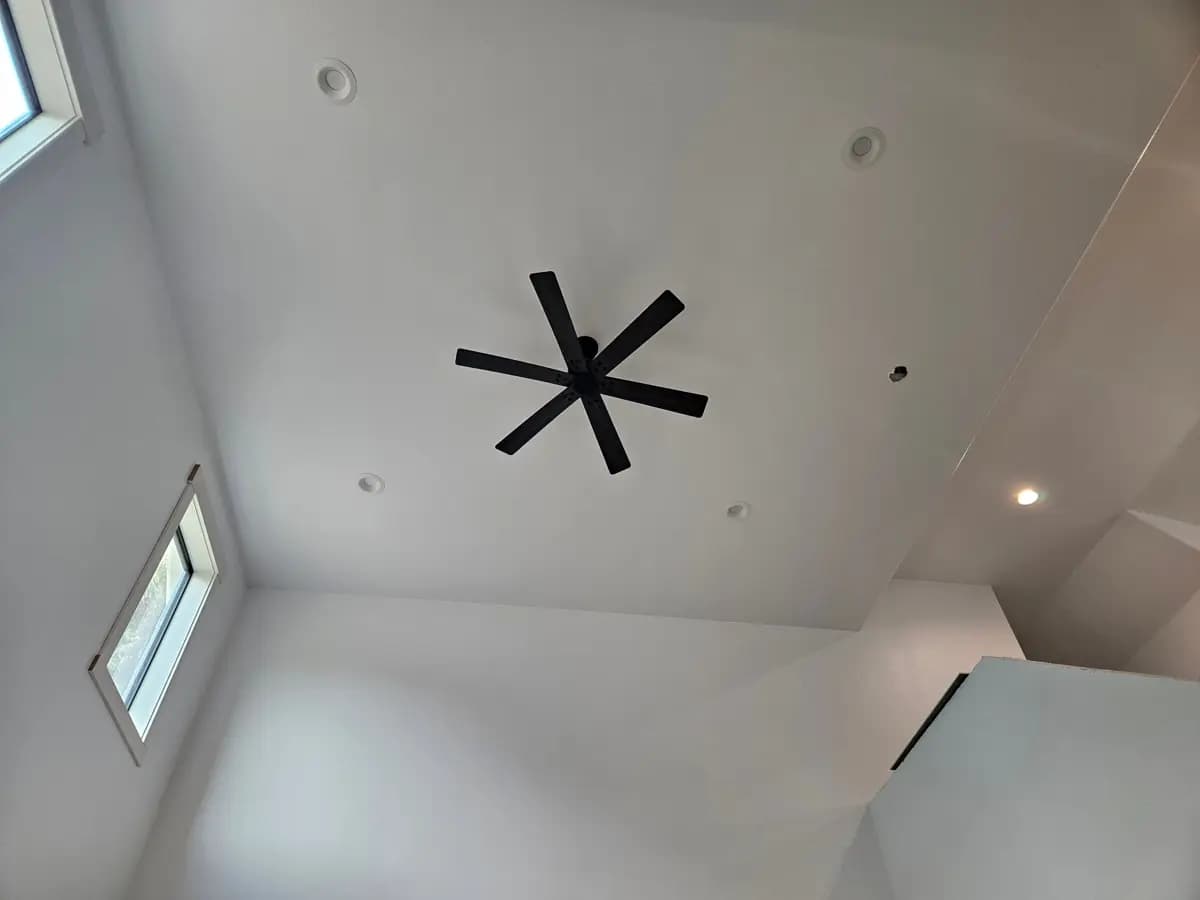
Vaulted ceilings show up in a lot of newer homes around Wenatchee, and they are exactly where a fan earns its keep. Warm air rises and sits up there.
They are also where DIY installs go sideways. You need a fan rated for the slope, the right mount and downrod, a box tied into framing, and safe access at height. Getting all four right is what keeps a fan quiet and steady for years.
Adding a Fan Where There Is No Wiring Yet
No fixture in that room? Not a problem. We can extend wiring from a nearby circuit, or run a new one if the load calls for it, and add a wall switch where it makes sense. In finished rooms we look for the cleanest route first to keep drywall repair to a minimum. Planning a bigger project? Fans fit naturally into remodel electrical work, while the ceilings are open.
Attic Fan and Whole House Fan Installation
These two get mixed up a lot. An attic fan pulls hot air out of the attic. A whole house fan pulls cooler evening air in through open windows and pushes the warm air out through the attic, so it cools the rooms you live in.
Both can make a real difference in a hot summer, and both need proper power and controls, usually a dedicated circuit plus a switch or timer. We handle the electrical side of attic fan installation and whole house fan installation. If the job also needs framing, ceiling or venting work, we will tell you up front so there are no surprises.
Fan Not Working? We Repair Them Too
Not every fan needs replacing. A fan that won’t start, hums, wobbles or runs slow is often a switch, a loose connection or a worn part. See our fan repair service for ceiling fans, bathroom exhaust fans and attic fans. We will tell you honestly whether a repair or a new fan makes more sense.
How Our Fan Installation Works
Most fan installs are done in a single visit. Here is what happens from start to finish.
- 01
Look at the room and ceiling
We check the ceiling height and slope, the room size and what is up there now, so the fan, mount and downrod fit the space.
- 02
Check the box and circuit
We confirm the electrical box is fan-rated and secured to framing, and that the circuit and switch can handle the fan you picked.
- 03
Install and balance
The fan is mounted, wired to the controls you want and balanced, so it runs quiet and steady on every speed.
- 04
Test and walk through
We test the fan, light and controls, show you how to switch direction for winter, and clean up before we go.
Why Hire a Licensed Electrician for Fan Installation
It is easy to think of a fan as a quick fixture swap. It is still electrical work. In Washington, electrical work for hire generally has to be done by a licensed electrical contractor using certified electricians. Installs booked through a store are often handed off to a subcontractor, so it is fair to ask who will actually show up and whether they are licensed.
S&T Electrical Solutions LLC is a licensed Washington electrical contractor (License STELEES765B5). Owner Steven Sabedra holds a Washington Master Electrician license (SABEDSA775QK). You can verify both with Washington L&I. We check the box, the circuit and the switch, not just the fan.
Fan Installation Across the Wenatchee Valley
We are based in Wenatchee and install fans in East Wenatchee, Cashmere and Leavenworth too. Tell us how many fans, which rooms, how high the ceilings are and whether there is a fixture there now. A quick photo of the ceiling helps a lot. See all of our service areas.
Fan Installation FAQs
Do I need an electrician to install a ceiling fan?
What is the average lifespan of a fan?
Can a ceiling fan be installed where a light fixture is now?
Can you install a ceiling fan on a vaulted ceiling?
Do I need a new circuit for a ceiling fan?
What is the difference between an attic fan and a whole house fan?

Request a project quote
Ready for a New Fan in Wenatchee?
Send a photo of the ceiling and tell us what you have in mind. We will take it from there.